

Whether you are building a home gym in a garage or spare room, or outfitting an apartment community or hotel fitness center along the Gulf Coast, the choice between commercial and residential gym equipment comes down to one question: how hard will this machine work every day? This guide compares the two categories in plain terms so you can match the equipment to your real use, avoid overspending, and skip the warranty surprises that catch many buyers off guard.
At Fitness Master in Pensacola, we sell, deliver, install, and service both home gym equipment and commercial gym equipment. Our goal is not to steer you toward the more expensive option. It is to help you decide what fits your space, your budget, and the number of people who will use it.
Key Takeaways
- Duty cycle is the core difference. Commercial gym equipment is engineered for all-day use by many people, often seven days a week. Residential equipment is built for one household, typically an hour or two a day.
- For most home gyms, quality residential equipment is the smarter buy. Many homeowners do not need a commercial treadmill or a commercial-grade Smith machine. Brands such as HOIST Fitness, Major Fitness, and Spirit Fitness make strong equipment for the home at a lower cost and a smaller footprint.
- Anything shared with people outside your household calls for commercial gym equipment. Apartments, hotels, offices, and studios need it. Residential warranties usually do not cover that kind of use, and putting home equipment in a business setting can leave you exposed on liability if someone gets hurt.
- A home gym can replace a gym membership, if you use it. Comparing the price of your own equipment with years of monthly membership fees is the fastest way to see whether it makes financial sense.
- Treadmills show the widest gap. Motor type, frame gauge, belt quality, and power requirements all differ sharply between home and commercial models.
- Buying locally lets you test both. At the Fitness Master showroom you can step onto a residential and a commercial machine back to back and feel the difference yourself.
Quick Comparison Snapshot: Commercial vs. Residential Equipment
The list below compares typical high-quality residential equipment with light commercial and full commercial gym equipment. Treadmills are the reference point, but the same distinctions apply to cardio equipment, strength machines, and functional trainers.
- Duty cycle. Residential: one to five users, short daily sessions, regular rest days. Commercial: many users back to back, often 8 or more hours a day, 7 days a week.
- Frame and build. Residential: lighter-gauge steel and more plastic components, though Major Fitness and HOIST offer strong residential options. Commercial: heavy-gauge steel, reinforced decks, and more cross-bracing, as in TRUE and HOIST commercial lines.
- Motor (treadmills). Residential: DC motor, quieter, runs on a standard outlet, suited to intermittent use. Commercial: AC motor, built for continuous use, handles heat better under constant load.
- Warranty. Residential: home use only, and typically does not cover shared or business settings. Commercial: light commercial or full commercial coverage tied to expected daily hours and traffic.
- Cost. Residential: lower upfront, cost-efficient for one to four users. Commercial: higher upfront, built to last under heavy traffic, with a lower cost per year of use.
- Footprint and power. Residential: smaller, often foldable, runs on standard household circuits. Commercial: larger and heavier, and may need dedicated circuits, higher voltage, or reinforced flooring.
- Best for. Residential: a family home gym in a garage, basement, or spare room. Commercial: an apartment fitness center, hotel gym, corporate wellness room, or training studio.
The practical rule: match the duty cycle and warranty coverage to how and where the equipment will actually be used.
Durability and Daily Use: How Hard Will Your Equipment Work?
Duty cycle is the number of hours per day, and the number of different people, a machine is built to handle before it starts wearing out faster than it should. It is a more reliable guide than any marketing label when you compare commercial and residential fitness equipment.
Residential use usually means one to five people in a household, training a few times a week for moderate sessions. The machine rests between users, sweat exposure is limited, and the room is often climate controlled. When it is your own equipment in your own space, you also decide who uses it and how often it gets cleaned.
Commercial use means many people cycling through the same machines back to back, sometimes for eight hours or more in a day. A commercial gym sees heavier sweat loads, rougher handling, and frequent cleaning with strong disinfectants. Commercial gym equipment has to tolerate all of that without breaking down, which is why it is built differently.
That difference shows up in several places:
- Belts and bearings. On treadmills, ellipticals, and bikes, belts and bearings wear faster under continuous use. Commercial machines use thicker, multi-ply belts and bearings sized for constant rotation.
- Cables, pulleys, and bushings. On strength machines and functional trainers, these parts wear at very different rates depending on traffic. Commercial versions are specified for far more repetitions than a household will ever put on them.
- Upholstery and grips. Shared spaces are hard on padding and handles. Commercial pieces use denser, sweat-resistant materials, while residential pieces typically use thinner foam and standard vinyl.
Is it ever worth overbuilding at home? Sometimes. A serious runner logging heavy weekly mileage, or parents sharing a home gym with athletic teenagers, can justify a light commercial treadmill or a heavier-framed squat rack. But for any business, shared amenity, or club where members pay a monthly membership to use the equipment, commercial is the correct choice. Residential components and warranties are not designed for that duty cycle.
Motors, Frames, and Build Quality (Treadmills as the Example)
Treadmills show the clearest split between commercial and residential design. The differences in motors, frames, and finishes apply broadly to other cardio equipment and strength equipment as well.
AC vs. DC Treadmill Motors
DC motors are the standard in residential treadmills. They run quietly, draw power efficiently from a standard household outlet, and suit the intermittent use pattern of a home gym. For most households, that is more than adequate.
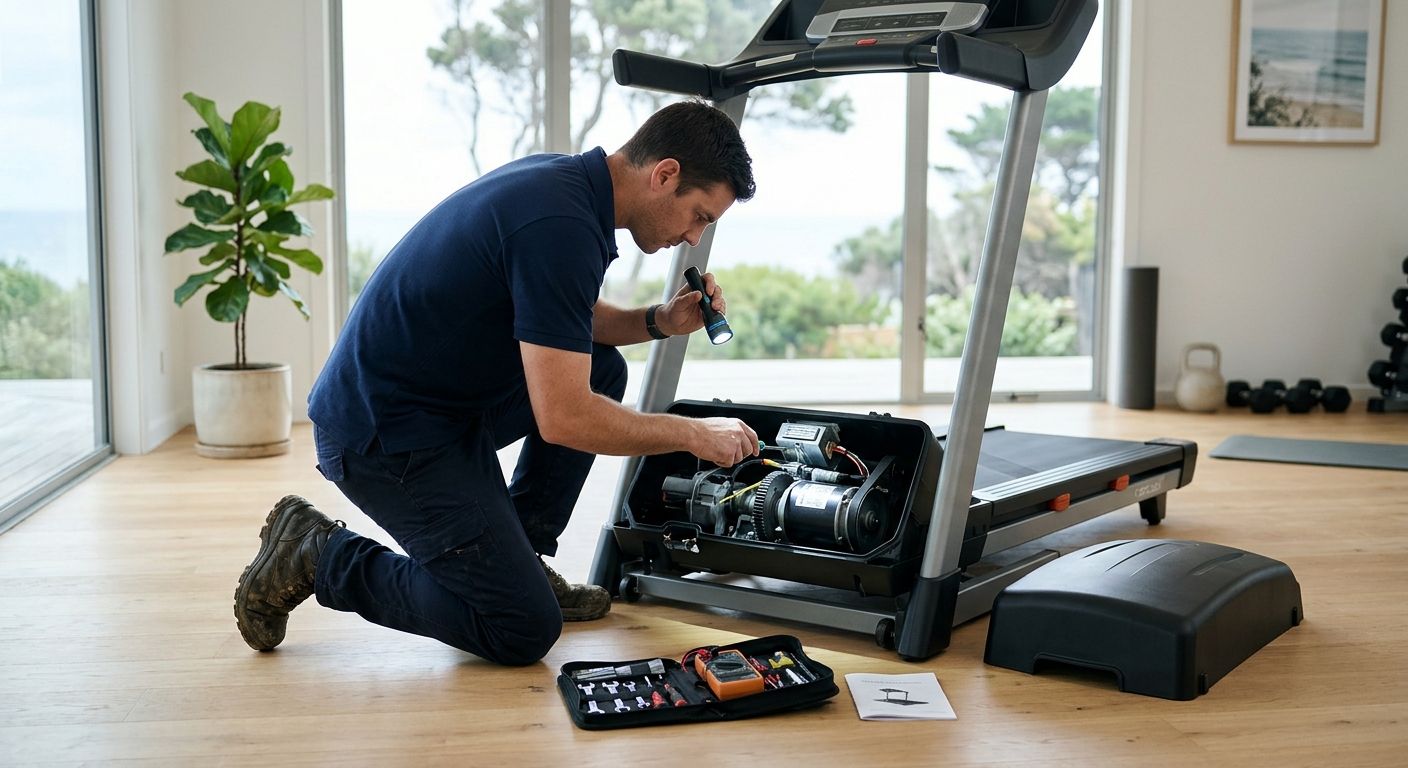
AC motors are the standard in commercial treadmills. They are designed for constant, back-to-back sessions, run cooler under continuous load, and generally have fewer wear parts because they do not use brushes. Commercial treadmills are rated by continuous horsepower (CHP), a measure of what the motor can sustain over long periods, which is the number that matters in a busy commercial gym.
Heat is the real issue. A DC motor running for an hour or two in a home gym stays comfortable. The same motor running six or eight hours a day in a busy apartment fitness center will overheat, lose efficiency, and fail early. Home buyers do not need an AC motor unless several adults are logging heavy mileage every day.
Frame Gauge, Deck, and Overall Construction
Frame gauge describes the thickness of the steel tubing, and a lower gauge number means thicker, stronger steel. Commercial treadmill frames use heavy-gauge steel with more cross-bracing and reinforced running decks, which means less flex, less wobble, and a steadier feel, especially for heavier users and runners.
Residential equipment uses lighter-gauge steel and more plastic, which keeps weight and cost down. For someone walking or jogging a few times a week, that is perfectly adequate. But step onto a commercial treadmill from TRUE or Spirit Fitness and the stability is obvious right away. Those brands also blur the line by offering near-commercial build quality for serious home runners.
Components and Finishes
Beyond the frame and motor, the details add up. Rollers, belts, and bearings are sized differently for occasional versus continuous use. Console plastics and buttons on commercial machines are built for constant presses and sweat exposure. Paint, shrouds, and covers are chosen to survive cleaning chemicals that would dull residential finishes over time.
Commercial grade home gym equipment, such as certain HOIST and Spirit models, is a good fit when a homeowner wants that club-quality feel and longevity without running a facility.
Strength Equipment: Smith Machines, Racks, and Free Weights
The same duty-cycle logic applies on the strength side of the floor, and a Smith machine is a good example. A residential Smith machine is designed for one household's training. A commercial Smith machine is built with a heavier frame, higher-grade bearings on the bar track, and more safety features, because it has to hold up to different lifters all day.
Weight capacity is where buyers get misled. Capacities on racks, benches, and Smith machines vary widely by model in both categories, so compare the rated number on the spec sheet instead of assuming that "commercial" means a certain figure. A well-built residential Smith machine handles serious home training. A commercial one is worth the extra cost when many people will use it, or when your own training is heavy enough to push a lighter frame.
Free weights follow the same pattern. Dumbbells, plates, and barbells last for decades in either setting, so the difference is in the equipment around them: commercial racks and benches use heavier-gauge steel, wider bases, and sturdier upholstery. For a home gym built around free weights, a solid rack and a stable bench matter far more than the commercial label.
Warranty and Service: Where Many Buyers Get Surprised
Warranty terms draw one of the clearest lines between commercial and residential gym equipment, and misunderstanding them is one of the most expensive mistakes a buyer can make.
A residential warranty is written for personal use in a home by a limited number of people. Many manufacturers state that coverage does not apply if the equipment is used in a commercial or shared setting. If a residential treadmill goes into an apartment clubhouse or hotel fitness room and fails, the manufacturer may well deny the claim. Commercial equipment typically carries longer, more comprehensive coverage that reflects expected daily hours and user traffic.
Light commercial warranties cover equipment rated for moderate shared use, such as apartment amenities, hotel gyms, or corporate wellness rooms that run a few hours a day. Full commercial warranties cover revenue-generating gyms and studios with all-day traffic.
One more caution for home buyers: putting commercial gym equipment in your house does not automatically give it a commercial warranty. Warranty terms vary by manufacturer and by model, so read the specific terms for any unit you are considering instead of assuming.
Liability is the bigger risk behind the warranty question. If someone is injured on a machine in a shared or business setting, the manufacturer may point out that you knew you were running a commercial space and still chose home-grade equipment, which makes it hard to argue the purchase was a reasonable one. That can leave the owner largely on their own, and the owner's insurance carrier may be reluctant to help if the equipment was never intended for that use. The details depend on the manufacturer, the policy, and the situation, so check with your insurance agent before you buy. The safest path is equipment that is rated and warranted for the way you will actually use it.
That is also why Fitness Master is selective about what we sell for commercial use. If a customer tells us they are opening a personal training studio or outfitting a shared fitness room, we will not sell them an inexpensive home machine, even when it would save them money. A local church once asked about a functional trainer that sold for under $2,000. We said no, because it did not carry a commercial warranty. If someone gets hurt, responsibility can fall on the church and on us, and insurance companies may not help defend either one in court. Instead, we encourage customers to buy a commercial unit, or to save until they can afford one.
At Fitness Master, we help you match the warranty level to your actual use, and we handle delivery, installation, and ongoing service for equipment we sell. For home buyers, a strong parts and labor warranty paired with local service support is often worth more than saving a few dollars on the sticker price.
Cost and Long-Term Value
Sticker price is only part of the story. Lifespan, downtime, and repair costs shape what equipment really costs you over the years.
Home Gym vs. Gym Membership
For households, the main alternative to buying equipment is a gym membership. A home gym removes the recurring monthly membership fee, the commute, and the wait for a machine. Prices for a gym membership vary a great deal by club and by market, so run the numbers for your own situation: multiply the monthly membership cost by the number of people in your household and the years you expect to keep the equipment, then compare that total with the price of the equipment plus a modest allowance for maintenance.
The math only works if the equipment gets used. A treadmill that becomes a coat rack costs more than any membership. That is why we encourage buyers to try machines in person first, and to buy a well-built residential treadmill, elliptical, or all-in-one home gym that the household will actually enjoy. The gap between a big-box budget purchase and specialty-store residential or commercial grade home gym equipment is durability and serviceability. Spend a bit more on a machine you can actually get parts for.
For Businesses and Property Managers
For commercial buyers, cutting corners with residential equipment in a shared gym usually means faster breakdowns, frustrated residents or guests, and higher replacement costs. Commercial equipment costs more upfront, but its durability generally leads to a longer service life under heavy traffic. A broken treadmill in an apartment or hotel gym reflects on the whole property and shows up in reviews. Think in terms of cost per year of use instead of upfront price, and the commercial investment is easier to justify.
Fitness Master can help plan an equipment mix that fits a real-world budget, whether that is a three-piece home gym or a full apartment community fitness center.
Space and Power Requirements
Commercial and residential gym equipment differ in footprint and power needs as well as build.
Space in a Home Gym
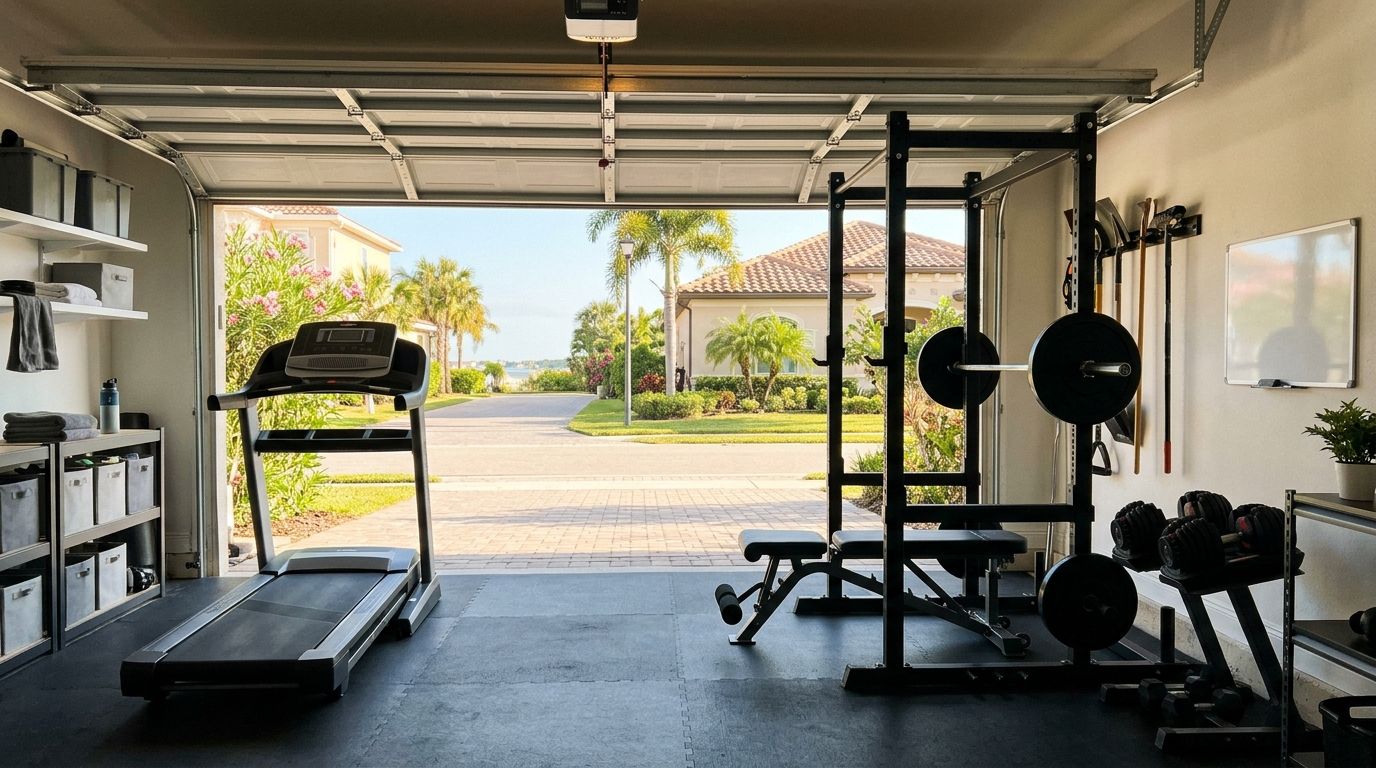
A home gym needs dedicated room, usually a garage, basement, or spare bedroom. Measure the space, including ceiling height, before you shop. Taller equipment such as a Smith machine or a rack with a pull-up bar needs clearance overhead, and commercial models are often taller and larger than residential ones. Doorways and stairwells matter too, since they limit how large a machine can be delivered. Leave enough open floor around each piece to move safely.
If you live in a condo or townhome, think about noise. Proper flooring and equipment with quieter operation make a home gym far easier on the neighbors. Most home gyms also lean toward versatile equipment because of space limits: adjustable dumbbells and a bench, a compact rack, and one or two cardio machines.
Space in a Commercial Facility
A commercial gym layout has to account for traffic flow, ADA access, clearances around treadmills and strength machines, and sightlines for supervision. Floors may need reinforcement, and heavy commercial strength machines are often anchored for stability.
Power
Residential equipment is usually designed to run on standard household circuits. Some commercial treadmills and electronic pieces need dedicated circuits or different voltage, and electrical work is an expense buyers often do not see coming when they put commercial gym equipment in a home. Check the power requirements on the spec sheet before you order.
Talk with our team about layout and delivery planning before you buy, so the equipment fits the room and gets through the door.
Gulf Coast Conditions: Humidity and Salt Air
Equipment shopping advice written for a national audience rarely mentions climate, but on the Gulf Coast it matters. Humidity is high most of the year, and salt air near the water is harder on metal, fasteners, and electronics than the inland air most manufacturers test for.
Garage gyms feel this most. A garage is rarely climate controlled, so exposed steel, cables, and hardware are more likely to show surface rust over time, and electronics on cardio equipment benefit from a drier room. A few habits help: keep cardio equipment in an air-conditioned space when you can, wipe down metal surfaces and bars after sweaty sessions, and use a dehumidifier or fans in a closed garage.
Climate is also one more reason build quality and finish matter. Better finishes, sealed components, and equipment with solid local service support tend to hold up better in this environment, whether it is a home gym or a hotel fitness room near the beach. Ask us which models handle coastal conditions well.
Who Should Buy Residential Equipment, and When Commercial-Grade Makes Sense at Home
Most people building a home gym do not need full commercial equipment. The question is where your use falls on the spectrum.
When Residential Equipment Is the Right Call
Quality residential equipment is ideal when:
- One to four people in the household train a few times a week, mixing walking or jogging with strength training.
- You want a setup that fits a garage or spare room without taking over the whole space. A home gym offers 24/7 access, no waiting for equipment, and no commute.
- Comfort, quiet operation, and a smaller footprint matter more than all-day durability.
- You value privacy while you work out and prefer your own equipment to a crowded room.
A strong residential setup might include a solid treadmill or exercise bike, a compact all-in-one such as a Major Fitness or HOIST home gym, free weights or adjustable dumbbells, and a half rack or squat rack with weight plates. Residential equipment is usually cheaper and more compact, and at this level of use it is the smart purchase. You can browse treadmills, exercise bikes, and strength and free weights on our site.
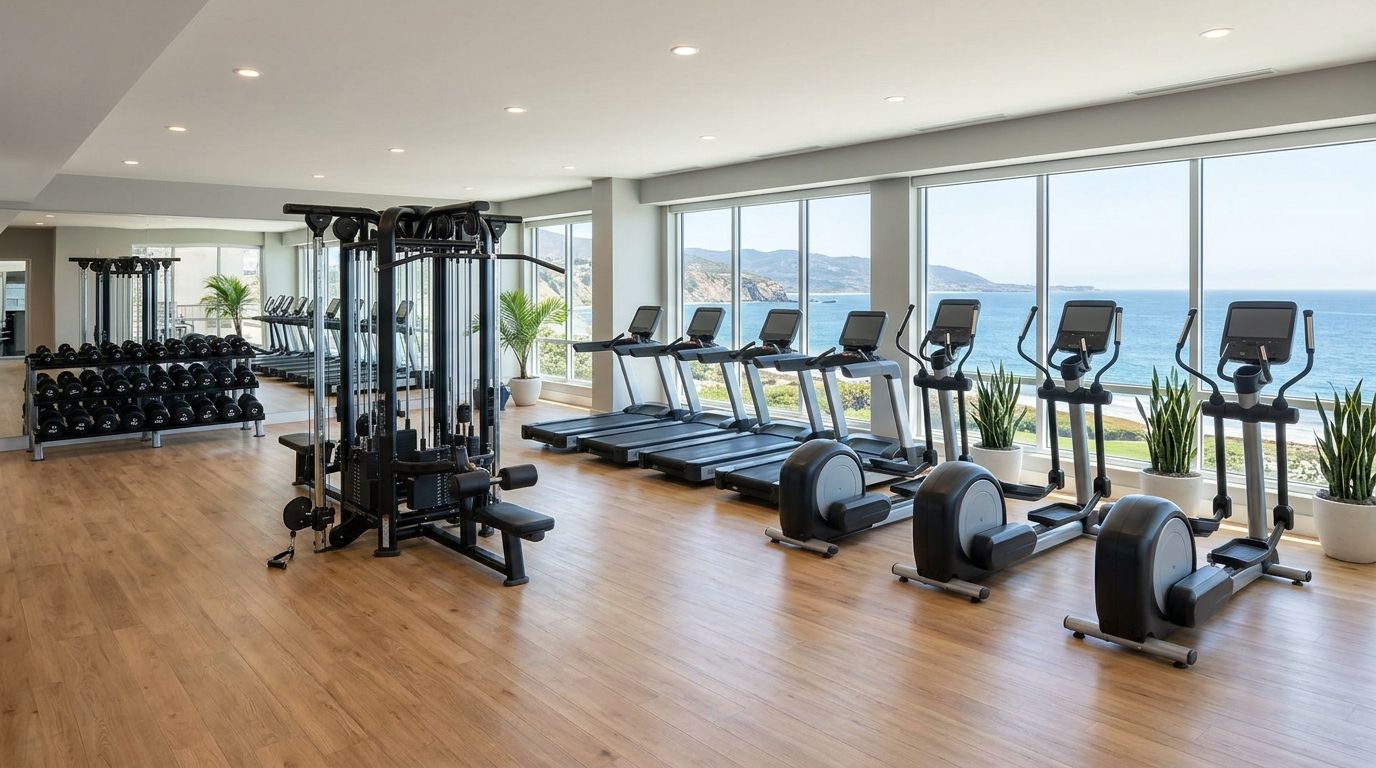
When Commercial-Grade Equipment Belongs in a Home Gym
A commercial treadmill for home use, or a light commercial rack, makes sense when:
- You are a serious runner or multi-sport athlete logging heavy weekly mileage.
- You have a large or multi-generational household with several adults and active teenagers using the equipment daily.
- You want the feel and stability of club-quality equipment and plan to keep it for a decade or more.
Light commercial equipment from Spirit Fitness, HOIST, and TRUE can be the sweet spot. These brands offer commercial grade home gym equipment with commercial-level stability and frame structure without the full commercial price. Just remember that a commercial machine in a house is still a bigger, heavier machine with more demanding space and power needs, so confirm that your room and circuits can handle it.
Who Needs Commercial Gym Equipment for a Business or Shared Space?
If anyone outside your household has access to the equipment, plan on commercial gym equipment. That applies to apartments, hotels, offices, and studios anywhere along the Gulf Coast.
Apartment and Condo Communities
An apartment fitness center faces unsupervised, round-the-clock use by residents and their guests. The equipment has to be durable, intuitive, and low maintenance. Home equipment will not hold up when that many people cycle through it every day. A curated mix of commercial cardio machines and a multi-station strength unit can serve many fitness levels in limited floor space, and commercial warranties protect HOAs and property managers when equipment runs all day.
Hotels and Resorts
Travelers expect clean, reliable cardio equipment and familiar commercial brands in the fitness room. Hotel equipment sees inconsistent but often intense use by guests who may not treat it gently, and uptime matters: a broken treadmill affects guest satisfaction and online reviews. A commercial gym setup with a dependable service plan protects the property's reputation.
Offices and Corporate Wellness Rooms
Employees of varying fitness levels use a workplace gym before work, at lunch, and after hours. Low-noise, low-maintenance commercial treadmills, bikes, and functional trainers fit a corporate wellness program well. A few pieces of commercial cardio plus one or two multi-function strength units can serve a lot of employees without a large footprint.
Training Studios and Small Gyms
Studios cycle clients through equipment all day, with heavier loading and interval conditioning. Racks, benches, cable systems, and cardio machines must tolerate group classes and heavy lifting. A commercial Smith machine, commercial-grade racks, and heavy-duty benches are built with the stronger frames, safety features, and upholstery that this traffic demands, and the warranty coverage that comes with them. In any revenue-generating fitness space, true commercial equipment is not optional, for warranty and liability reasons alike.
Why Buy Locally in Pensacola for Commercial and Residential Equipment
Fitness Master is a family-owned fitness equipment retailer in Pensacola, serving the Gulf Coast since 1986. We have worked on both home and commercial installations, and we know the local conditions, including humidity, salt air, and tight delivery routes.
Test Both Types Side by Side
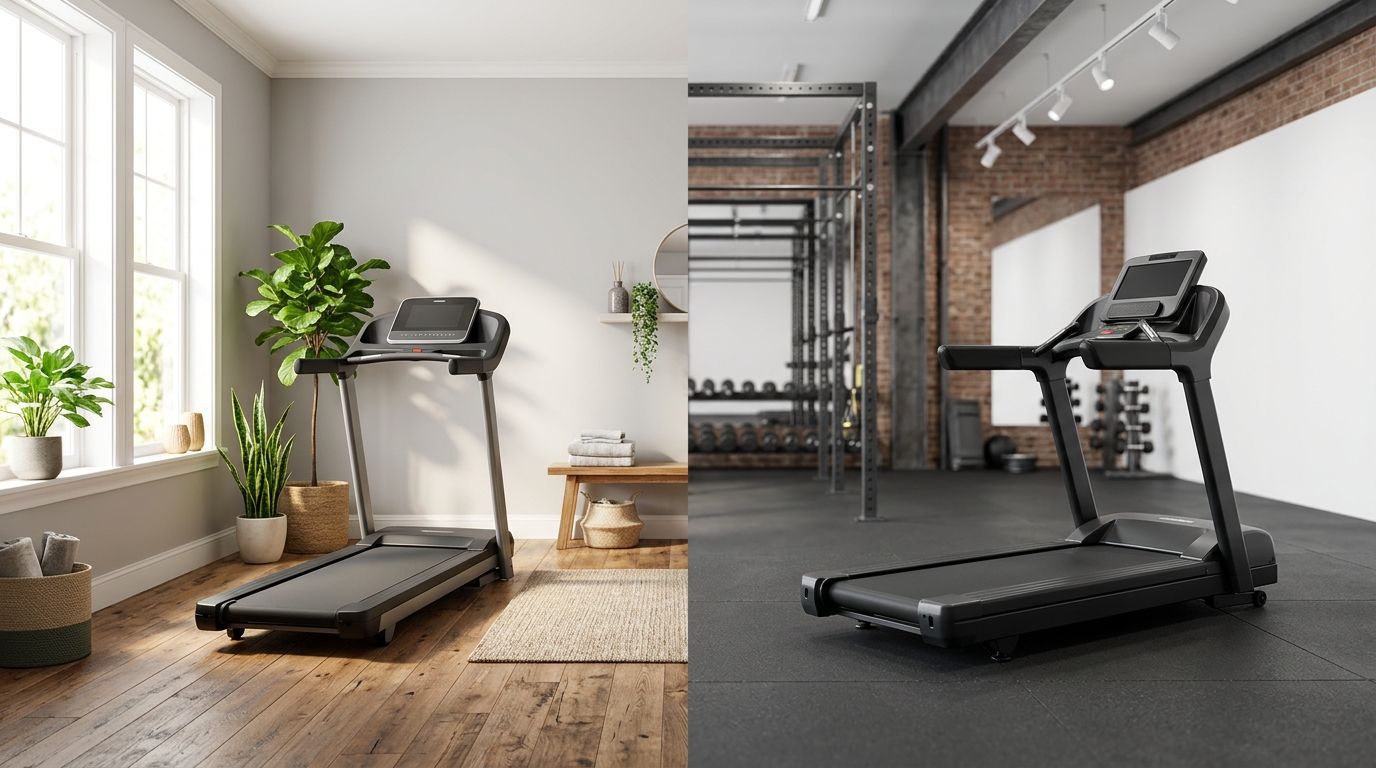
Visit the showroom to walk, run, and lift on commercial and residential options from HOIST Fitness, Major Fitness, Spirit Fitness, TRUE, and other product lines we carry. Try a commercial treadmill next to a residential model, back to back. You will feel the difference in belt stability, frame rigidity, noise, and console response. That hands-on time is worth more than any spec sheet.
Delivery, Installation, and Ongoing Service
Fitness Master provides professional delivery, installation, and ongoing service, for projects from a garage home gym to a multi-room fitness center. That includes navigating stairs, tight doorways, and upstairs rooms. Proper installation protects both the equipment's longevity and your warranty. Commercial buyers, whether property managers, facility managers, or business owners, can talk with our team about choosing the right mix of equipment for expected traffic and planning around maintenance.
Visit or Call Fitness Master
Stop by Fitness Master at 5515 N. Davis Highway in Pensacola or call (850) 478-0842 to talk through your project. You can also browse our full equipment lineup before you visit. Whether you are building a home gym or outfitting a commercial gym, we will help you find equipment that fits your space, your users, and your budget.
FAQ: Commercial vs. Residential Gym Equipment
Is commercial gym equipment always better than residential for home use?
No. Commercial equipment offers maximum durability and stability, but it is also larger, heavier, and more expensive. Many home users are well served by high-quality residential equipment. Overbuying commercial gym equipment for light home use can waste space and money without adding real-world benefit. The right choice depends on how often you train and how many people share the equipment.
Can an apartment community or hotel fitness center use residential equipment?
No. Apartment communities and hotels should not settle for residential-grade equipment. Most manufacturers advise against it. Residential warranties often do not cover equipment placed in a shared or business setting, and the components are not engineered for that duty cycle. Property owners should choose commercial gym equipment for apartments and hotels to avoid early failures, uncovered repairs, and liability problems if someone is injured. A manufacturer or insurer may be unwilling to stand behind home-grade equipment that was knowingly placed in a commercial setting.
What is duty cycle, and how do I know what I need?
Duty cycle describes the hours per day and the number of users a machine is built to handle. A family of four training a few times a week has a very different duty cycle than an apartment fitness center serving dozens of residents. Check the intended use before you buy, and talk with Fitness Master to match equipment ratings to your real usage.
Do I need an AC motor treadmill at home?
Most homeowners do not. A good DC motor treadmill handles daily home use comfortably and runs quietly on a standard outlet. An AC motor can make sense for a very high-mileage runner or a household where many adults use the treadmill heavily every day, but that is the exception.
Is a commercial treadmill for home use worth it?
It can be, for serious runners, large households, or anyone who wants a machine to last a decade or more. The tradeoffs are a larger footprint, more weight, higher cost, and possible power requirements beyond a standard circuit. For a household of one to four people who walk or jog a few times a week, a quality residential treadmill is usually the better value.
Is a home gym cheaper than a gym membership?
Often, over time, but it depends on the equipment you buy, how many people use it, and how consistently you train. Add up the monthly membership cost for everyone in your household over the years you expect to keep the equipment, then compare that with the equipment price. The savings only materialize if the equipment gets used.
How important is frame gauge when choosing a treadmill or rack?
Thicker steel, which means a lower gauge number, generally brings more stability and a longer lifespan. That matters most for heavier users, serious runners, and any commercial space. The best advice is to step on the machine and feel the difference in the showroom instead of relying on specs alone.
Can Fitness Master help with delivery, installation, and service after the sale?
Yes. Fitness Master provides professional delivery, installation, and ongoing service for equipment for homes and commercial facilities across the Gulf Coast. Working with a local Pensacola team simplifies every step from purchase to long-term maintenance and warranty support.