

Every treadmill, elliptical, bike, and strength machine tells you when something is wrong. A new squeak, a belt that hesitates underfoot, a console that flashes an error code. These small signals almost always show up before a breakdown, and catching them early is the difference between a quick adjustment and a costly motor or control board replacement.
We've been selling and servicing fitness equipment along the Gulf Coast for over 40 years, and our certified service technicians see the same warning signs again and again. This guide covers the 8 most common signs your exercise equipment needs repair, which fixes you can safely handle yourself, and when it's time to call a professional.
Key Takeaways
- Most equipment failures announce themselves early through noise, belt slipping, erratic speed, error codes, or changes in resistance.
- Some signs mean stop using the machine right away: a burning smell, tripped breakers, a torn belt, or a cracked frame.
- Cleaning, lubrication, belt tension, and tightening bolts are safe DIY tasks. Motors, wiring, control boards, and drive systems are a job for an exercise equipment repair technician.
- If a repair costs more than about half the price of a comparable new machine, replacement is usually the smarter investment.
- Fitness Master provides in-home and on-site exercise equipment repair for homes, apartment complexes, HOAs, and studios throughout Northwest Florida and South Alabama.
8 Signs Your Exercise Equipment Needs Repair
These warning signs apply across cardio and strength equipment. Some are simple maintenance fixes. Others mean the machine needs a technician before it fails completely.
1. New or Louder Noises
A machine that suddenly squeaks, grinds, clunks, or thumps is telling you something has changed. On a treadmill, squeaking usually points to a dry deck, a misaligned walking belt, or loose hardware. A rhythmic slapping sound often means the belt has stretched and lost tension.
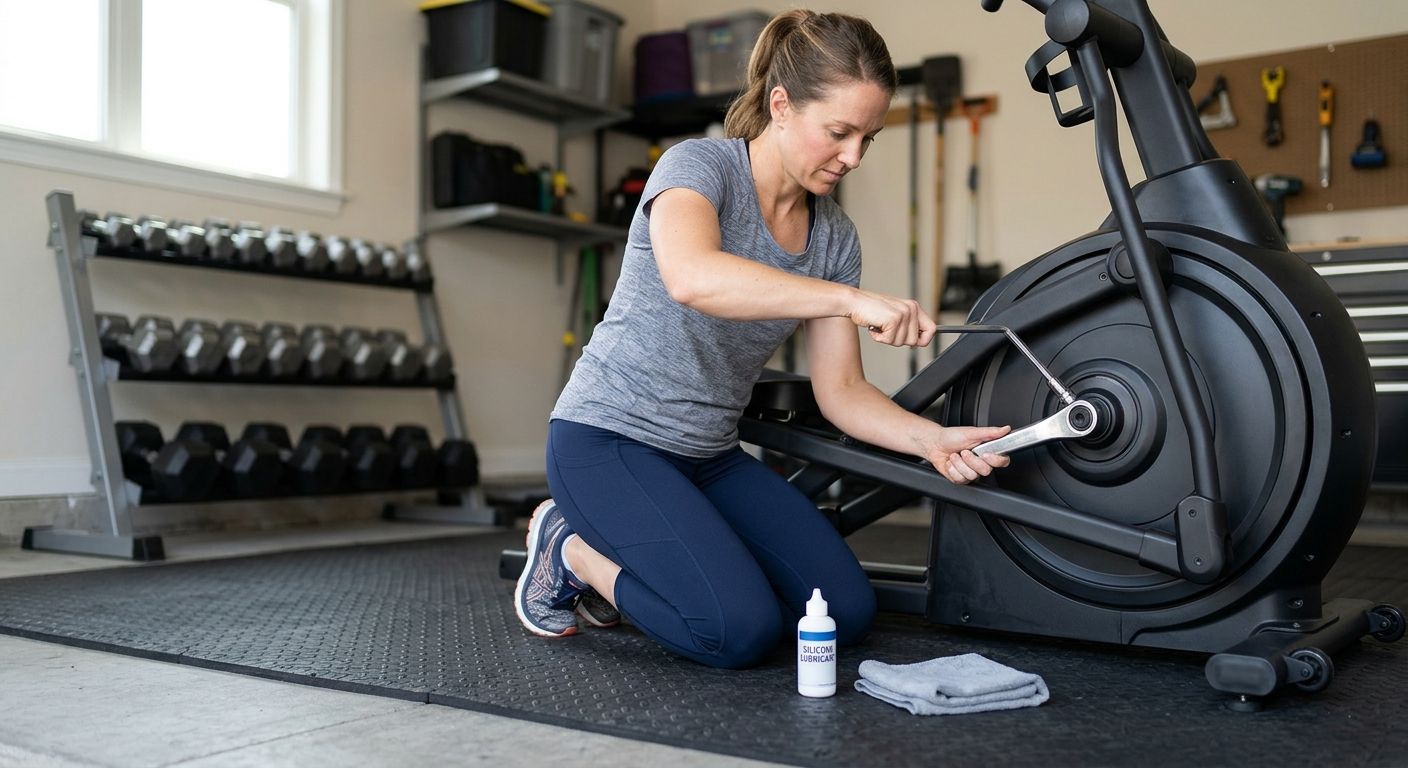
A squeaky elliptical machine is one of the most common calls we get. Elliptical squeaking usually comes from dry pivot points, worn bushings, or loose arm and pedal bolts. Grinding or clicking from inside the housing is different. That typically means worn bearings or a failing drive component, and it needs a professional.
What to do: Tighten visible bolts and clean and lubricate per your owner's manual. If the noise comes from inside the motor hood or flywheel housing, or returns within a few days, schedule a repair.
2. A Treadmill Belt That Slips, Frays, or Tears
The walking belt takes more abuse than any other part of a treadmill. Watch for:
- Hesitation or slipping when your foot lands, especially at low speeds or on an incline
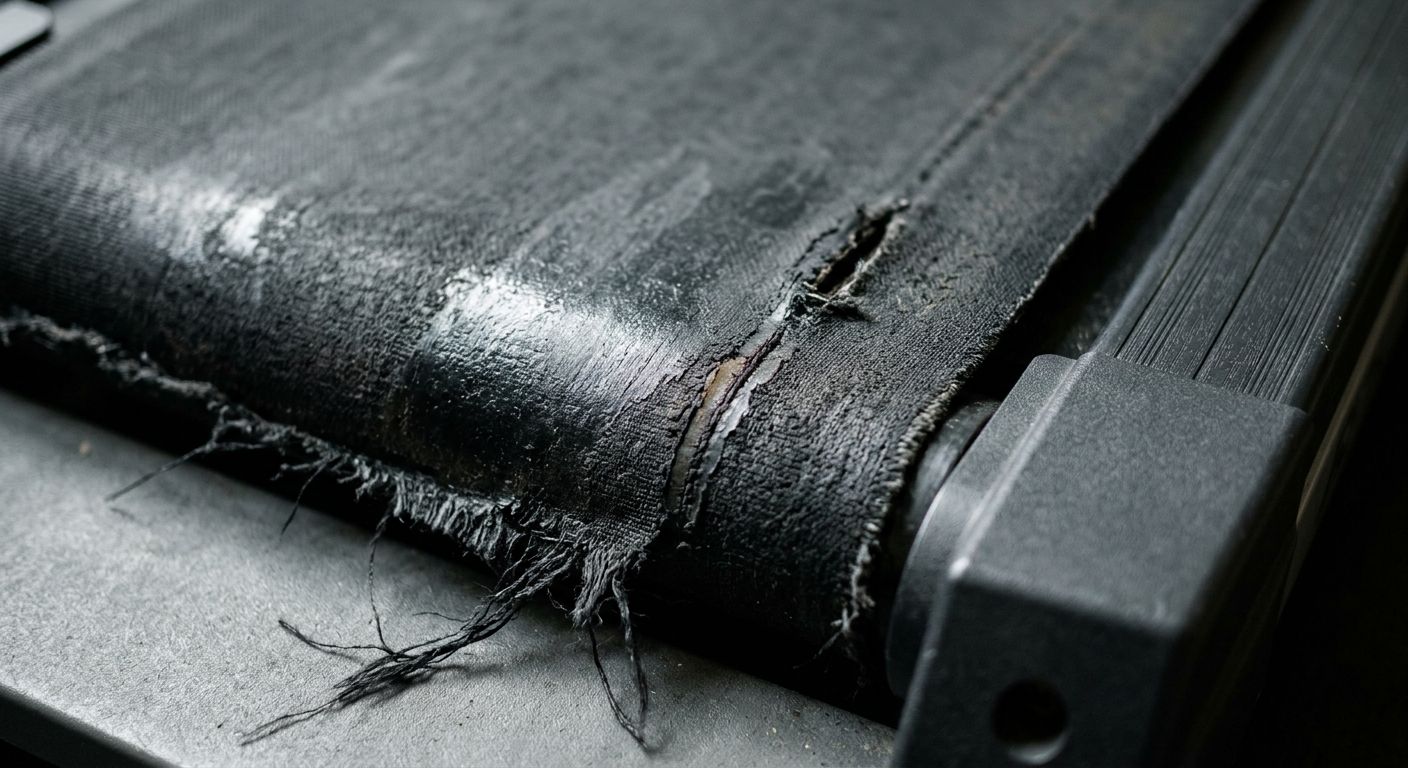
- Frayed edges, shiny glazed spots, or a rough surface
- A belt that drifts to one side and rubs the rails
- Cracks, a lifting seam, or a ripped treadmill belt
Slipping and drifting can often be corrected with tension and alignment adjustments. A torn belt or a lifting seam cannot be safely patched. Stop using the treadmill and have the belt replaced. Repair tapes and patch kits are temporary at best, and a belt that fails mid-run is a real injury risk.
3. Speed or Incline That Changes on Its Own
Your treadmill should do exactly what you tell it. Warning signs include speed surging or dropping without input, the belt stopping mid-workout, the machine speeding up as soon as it powers on, or an incline that won't respond. These point to a failing drive motor, incline motor, speed sensor, or motor control board. They are not DIY repairs.
4. Burning Smells, Flickering Power, or Tripped Breakers
This is the most urgent sign on the list. A hot or burning smell, a console that flickers, lights that dim when you step on the belt, or a breaker that trips during workouts all signal an electrical or motor problem. Unplug the machine and do not use it until a technician has inspected it. Continuing to run it risks destroying the motor or control board, and creates a fire hazard.
5. Console Errors or a Blank Display
Error codes, frozen screens, and dead consoles have a range of causes. Start with the simple checks: confirm the safety key is seated, the machine is plugged into a working grounded outlet, and the power switch and reset button are on. If the error code returns after a full power cycle, look it up in your owner's manual and call for service. Persistent errors usually mean a sensor, wiring, or control board issue.
6. Resistance That Feels Wrong
On ellipticals, bikes, and rowers, resistance should be smooth and consistent at every level. If your elliptical is suddenly hard to pedal, resistance jumps between levels, or changing the setting does nothing, the cause is often a worn drive belt, a failing resistance motor, or a misadjusted brake. Jerky or uneven pedaling can also mean worn bearings in the crank or flywheel.
7. Wobbling, Rocking, or Frame Damage
A machine that rocks, shifts, or feels unstable during use is not safe. Check that the unit sits level and that all frame bolts are tight. Then inspect welds and frame joints. Any crack in a frame, weld, or load-bearing part means the machine should be taken out of service until a professional evaluates it.
8. Frayed Cables or Rough Pulleys on Strength Machines
Cable machines, functional trainers, and selectorized strength equipment carry heavy loads through cables and pulleys. Inspect cables regularly for fraying, kinks, or exposed wire, and listen for pulleys that grind or stick. A frayed cable can snap under load. Replace it before the next workout, not after.
DIY Fix or Call a Technician?
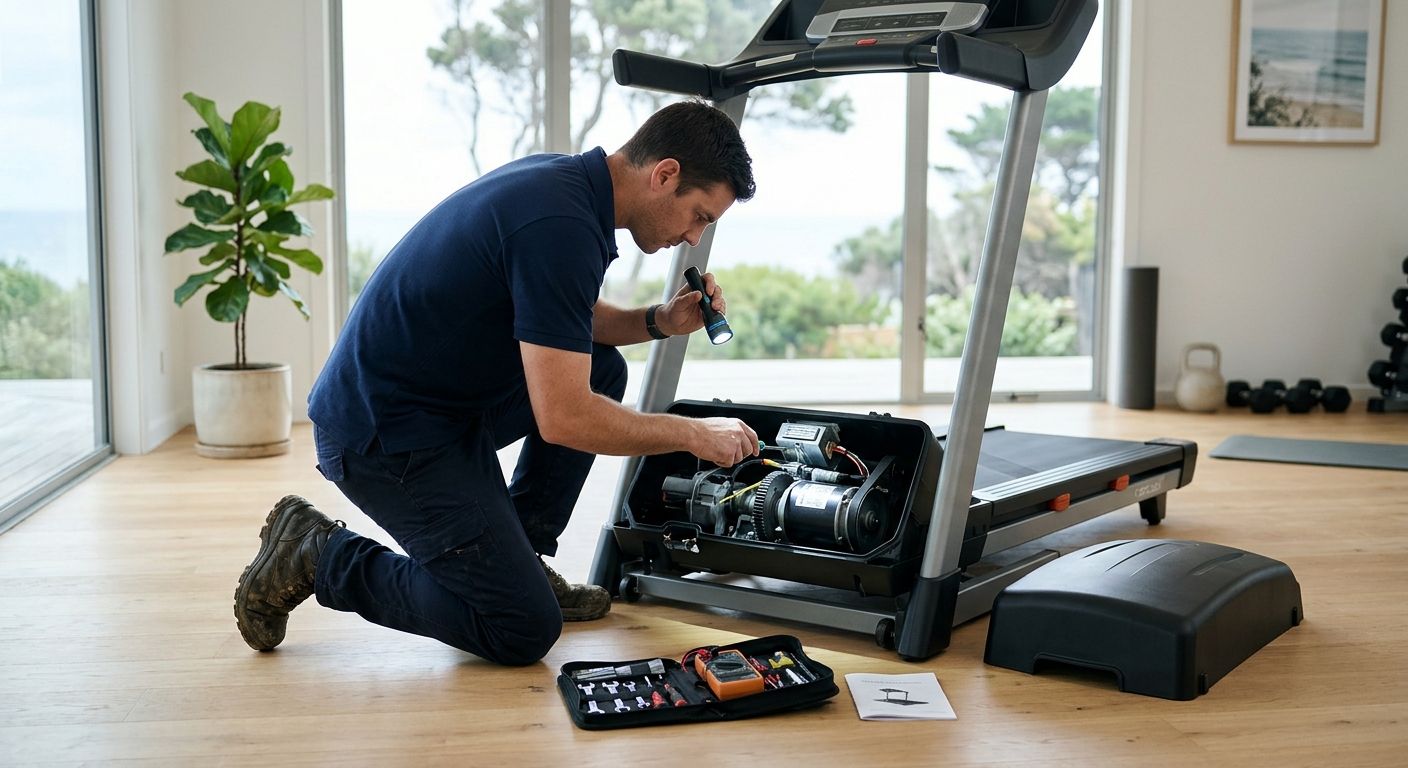
A good rule: if the fix happens outside the machine's housing, you can usually handle it. If it requires opening the motor hood, touching wiring, or replacing drive parts, call an exercise equipment repairman. Opening the housing yourself can also void your warranty.
Safe to handle yourself:
- Wiping down and vacuuming around the machine
- Lubricating the treadmill deck per the manual
- Adjusting treadmill belt tension and alignment
- Tightening visible frame, arm, and pedal bolts
- Checking the safety key, outlet, and power cord
- Leveling the machine on the floor
Call a professional:
- Drive motor, incline motor, or resistance motor problems
- Burning smells, flickering power, or tripped breakers
- Persistent error codes after a power cycle
- Torn walking belt or worn drive belt
- Control board, sensor, or wiring issues
- Grinding bearings, cracked frames, or frayed cables
For a full home maintenance routine, see our guide to Treadmill Maintenance 101. Regular care prevents many of the problems on this list.
Should You Repair or Replace?
Most exercise equipment problems are worth repairing, especially on quality machines built to last. Replacement starts to make more sense when:
- The repair costs more than about half the price of a comparable new machine
- Parts are discontinued or hard to source for your model
- The same problem keeps coming back despite multiple repairs
- The machine is 8 to 10 or more years old and needs a major component like a motor or control board
- The frame is cracked or structurally compromised
For gyms, apartment complexes, HOAs, and hotels, downtime matters too. A machine that is out of service every few months costs more in frustrated residents and members than the repair bill shows. Our guide to Commercial vs. Residential Fitness Equipment explains why commercial-rated machines hold up better in shared spaces.
We give honest recommendations either way. If your machine is worth fixing, we'll fix it. If it isn't, we'll tell you, and help you find the right replacement for your space and budget.
What to Have Ready When You Call for Repair
A few details help our technicians diagnose the problem faster and arrive with the right parts:
- Brand and model number, usually on a sticker near the power switch or on the frame
- Serial number, which also helps confirm warranty coverage
- The symptom: what you hear, see, or feel, and any error code on the console
- When it happens: at startup, at certain speeds or resistance levels, or after a few minutes of use
- Approximate age of the machine and any past repairs
- Warranty paperwork, if you have it
A short phone video of the noise or problem is often the most helpful thing you can send.
Frequently Asked Questions
Who fixes treadmills and other exercise equipment?
Certified fitness equipment repair technicians handle treadmill, elliptical, bike, and strength equipment repair. Many manufacturers also work through authorized local service partners for warranty repairs. Fitness Master's service team repairs most major brands for homes and facilities across Northwest Florida and South Alabama.
Why is my elliptical squeaking?
Most elliptical squeaking comes from dry pivot points, loose bolts in the arms or pedals, or worn bushings. Tighten the hardware and lubricate pivot points per your manual. If the squeak continues or turns into grinding, the bearings or drive components likely need professional service.
Why is my elliptical so hard to pedal?
Check that the resistance is set where you expect and that nothing is blocking the flywheel or rails. If pedaling stays stiff at low resistance, the cause is usually a failing resistance motor, a worn drive belt, or worn crank bearings.
Can a ripped treadmill belt be repaired?
No. Patch kits and repair tape are not a safe long-term fix for a torn or ripped treadmill belt. A damaged belt can fail suddenly under your feet. The belt should be replaced, and the deck checked for wear at the same time.
How often should exercise equipment be professionally serviced?
For home equipment, a professional service visit every 12 to 24 months is a smart baseline. Commercial equipment in gyms, apartment complexes, and hotels should be serviced more often because it sees heavier daily use.
Do you offer in-home treadmill repair?
Yes. Our technicians repair treadmills, ellipticals, and other fitness equipment on site, so you don't have to move a heavy machine to a shop.
Get Your Equipment Back in Shape
Don't wait for a small squeak to become a dead motor. If your treadmill, elliptical, bike, or strength machine is showing any of these warning signs, our certified service technicians can diagnose the problem and get you back to your workouts.
Fitness Master has served Northwest Florida and South Alabama for over 40 years, providing exercise equipment repair for homes, apartment complexes, HOAs, studios, and hotels. Contact our service team to schedule a repair today.